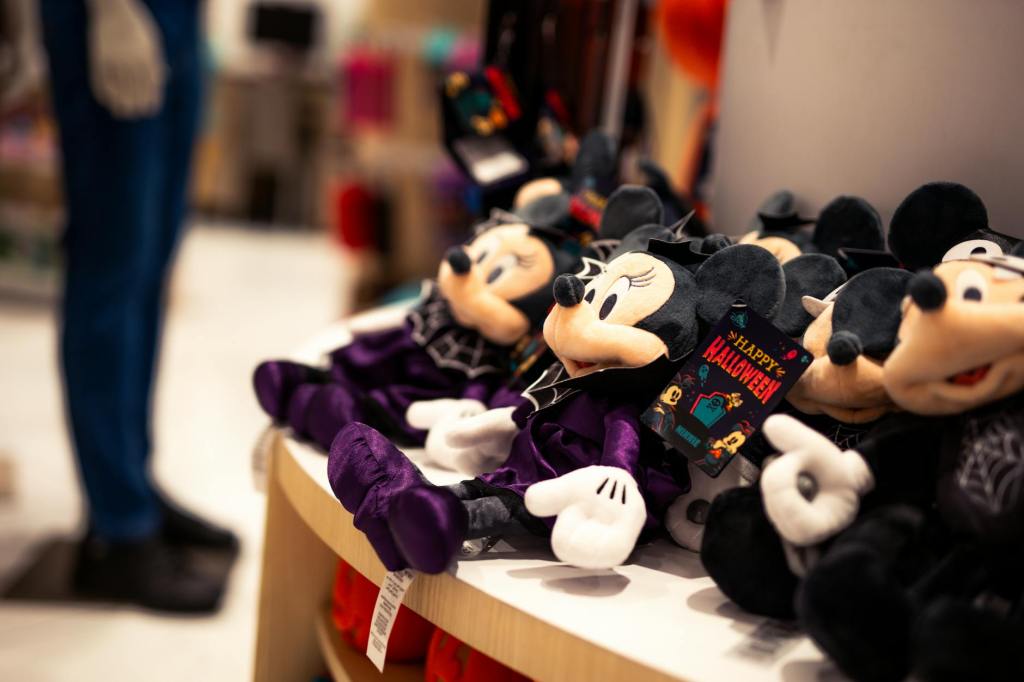
Disney merchandise, be it toys, clothing, video games, plushies or pins, is seemingly unavoidable. Everywhere you look there is a new partnership or collaboration being announced on social media. It’s unsurprising, particularly when you consider how much revenue merchandise generates for the Walt Disney Company.
According to their 2025 Annual Report, Disney’s total “Product” revenue (which covers merchandise, publishing, and games) reached a whopping $9.8 billion. Despite this, there has been a noticeable lack of merchandise in recent years, specifically for modern Disney films.
After watching Pixar’s Hoppers recently, I was incredibly excited to check out what merchandise would be available, particularly given the impressive marketing push Disney and Pixar gave the movie. With the film’s cast of cute and cuddly characters, I was expecting a range of plushies and maybe even a series of pins too, but I was frankly left incredibly disappointed with what I could find on the Disney Store.
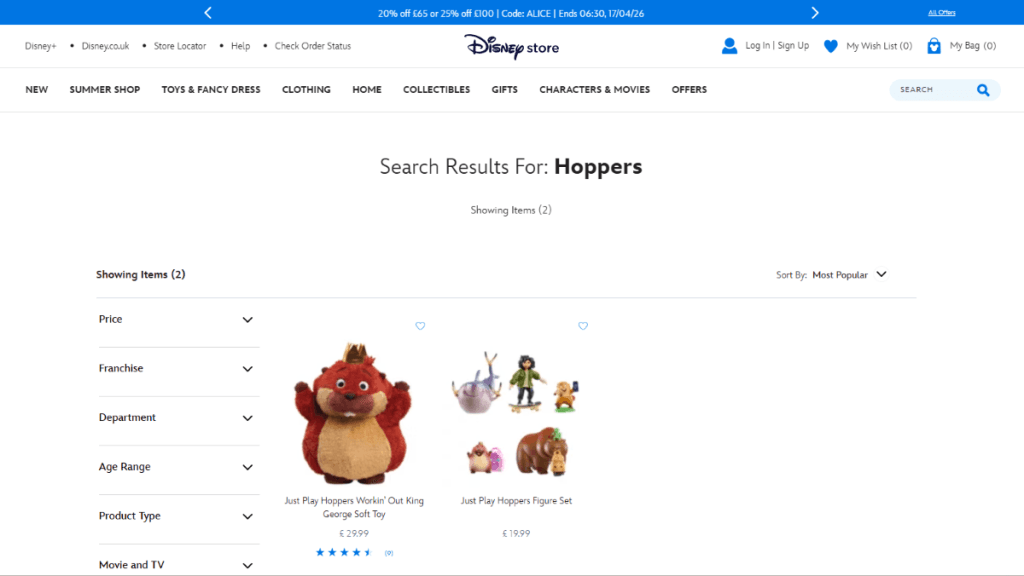
A single plush toy of King George and a figurine set of a handful of the characters made up the merchandise available here for fans in the UK. Upon checking the US Disney Store, stateside Hoppers fans didn’t get much of a better treatment, with only a handful of T-shirts available in addition to the soft toy and figurine set. As a fan who is partial to a Disney collectable or two, I was really disappointed with what was available to coincide with the release of Hoppers.
So, why are we getting less and less merchandise for original Disney movies? Why are we seemingly getting more and more merchandise for the classic Disney movies instead? I’ve taken a look at why this might be happening…
The Financial Unknown
Despite the vast amount of revenue which merchandise delivers for the Walt Disney Company, to ensure that revenue is profitable, Disney’s current strategy is built on “guaranteed wins.” It’s reported that in 2025, Lilo & Stitch merchandise alone generated over $4 billion. When one 20-year-old movie makes that much (granted, the live-action remake certainly had an impact on that figure!), Disney is less likely to risk floor space on a brand-new movie like Hoppers until they are certain it has the same “staying power.”
From “Toy Aisle” to a “Lifestyle Brand”
Have you noticed how the toy aisles in supermarkets seem to be shrinking, while the adult sections in shops like H&M or Pandora are growing? Disney is undergoing a massive pivot. They’ve realised that while a child might play with a plastic figurine for a week, a Gen Z or Millennial fans will pay a premium for a high-end collaboration they can actually wear or display.
We’re seeing fewer traditional “playthings” and more “lifestyle” items – designer handbags, jewellery, and “streetwear” collections. By targeting fans with disposable income who grew up with the classics, Disney is essentially trading the £10 plastic toy for a £100 fashion statement. It makes sense for their bottom line, but for those of us who just want a decent plushie of a new character we love, it feels like we’re being left behind.
The Digital Takeover
It’s not just physical aisles that are changing; it’s digital ones, too. Disney has realised that a lot of their audience, especially the younger generation, would rather spend their money on a digital “skin” for Fortnite than a plastic toy for their bedroom. With Disney’s massive $1.5 billion investment in Epic Games, we’re seeing a shift where characters like Buzz Lightyear or the Incredibles gang show up as playable avatars before they even hit the Disney Store shelves.
These digital goods are a goldmine for Disney; there are no manufacturing costs, no shipping delays, and no clearance aisles. When you consider that in-game spending is projected to hit over $170 billion by 2030, it’s easy to see why Disney might prioritise a virtual “Mabel” skin over a physical plushie. In their eyes, a digital item that you can show off to millions of other players online has more “social currency” than a toy sitting on a shelf at home.
The “Wait and See” Strategy
In the 90s, you couldn’t move for merchandise hitting the shelves months before a movie even premiered. Today, the strategy has flipped. To avoid the dreaded “clearance aisle” fate that hit films like Wish, Disney often waits for a movie to prove its “staying power” before mass-producing a full range.
It’s a frustrating cycle for fans. We want to celebrate a movie like Hoppers while the hype is at its peak, but Disney is playing it safe, waiting to see if the streaming numbers justify the manufacturing costs. It feels like they’re missing the “magic” of the moment in favour of a spreadsheet.
The Verdict
It’s a bittersweet time to be a Disney fan. While it’s great to see the classics getting so much love, the lack of support for original stories like Hoppers feels like a missed opportunity. If Disney doesn’t let us bring these new characters home through merch, how are they ever supposed to grow into the ‘classics’ that the next generation falls in love with?
What do you think? Have you struggled to find merch for your favourite modern Disney films, or are you happy sticking with the classics? Let me know in the comments!


Leave a Reply